
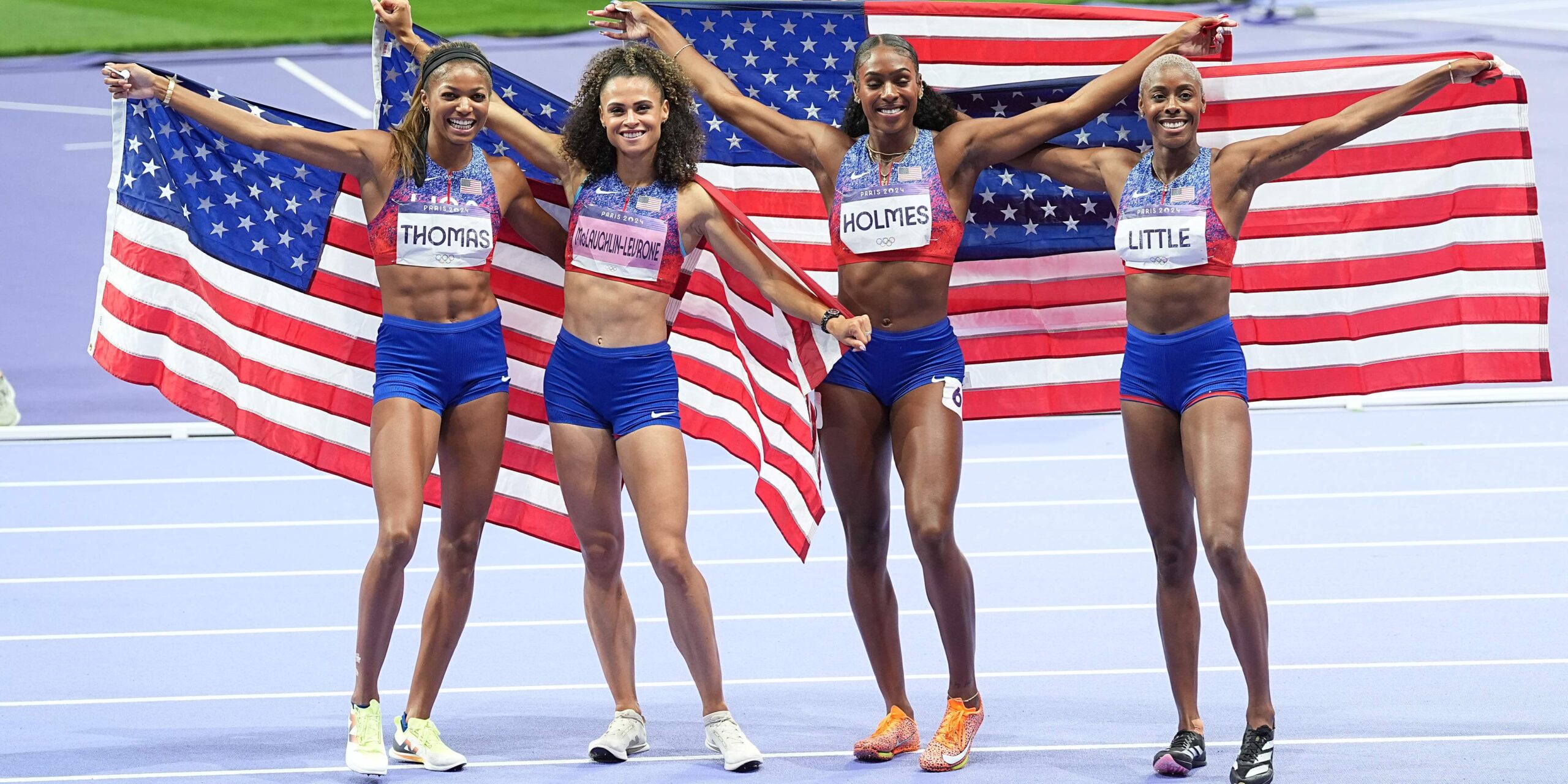
USA Track & Field (USATF) has unveiled a new initiative known as the “One Team” Relay Program, a strategic plan designed to strengthen the United States’ relay dominance ahead of the World Athletics Championships Beijing 2027 and the 2028 Summer Olympics in Los Angeles.
The program focuses on improving relay chemistry, structured preparation, and long-term continuity as the U.S. aims to capture all six relay gold medals at the LA 2028 Games. The ambitious initiative reflects a broader shift within USATF’s high-performance strategy.
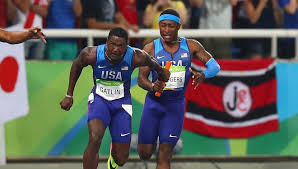
Relay events have historically been one of the strongest areas for Team USA, but inconsistencies in baton exchanges, selection processes, and last-minute team lineups have occasionally cost the nation medals at major championships. With the LA Olympics approaching on home soil, USATF officials believe a more centralized and structured approach is essential to maximize the country’s deep sprinting talent.
Building Relay Chemistry Early
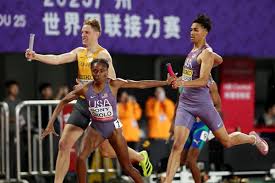
The One Team Relay Program will bring athletes together earlier in the season and more frequently through mandatory relay training camps. These camps will focus heavily on baton exchanges, race strategy, and developing chemistry between runners across the 4x100m, 4x400m, and mixed relay events.

Historically, relay teams were often assembled shortly before major competitions, which sometimes resulted in coordination problems. Under the new system, athletes will train together months in advance to refine their exchanges and develop trust among teammates.
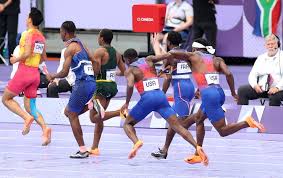
Officials say the emphasis on preparation will help reduce costly errors that have plagued some U.S. relay teams in recent years. Relay races are among the most technically demanding events in track and field, where a single mistake in the exchange zone can lead to disqualification or lost medals.
Selection Based on Performance and Experience
Athletes selected for the relay pools will be chosen using a combination of individual performance, relay experience, and commitment to the program. Availability for relay camps and willingness to participate in team activities will also play a key role in the selection process.
This model aims to create continuity across multiple championship cycles rather than selecting teams on a race-by-race basis. By establishing a defined pool of athletes, USATF hopes to build consistent lineups capable of delivering podium performances at the biggest events.
Relay depth has always been a major strength for the United States. Stars such as Noah Lyles, Sha’Carri Richardson, and Sydney McLaughlin-Levrone have already played key roles in recent global relay successes, and the new program is designed to ensure the next generation of athletes can seamlessly integrate into championship teams.
Target: Six Olympic Relay Gold Medals
One of the program’s most ambitious goals is to win all six relay gold medals at the LA 2028 Olympics. The Olympic relay schedule is expected to include the men’s and women’s 4x100m, men’s and women’s 4x400m, and two mixed relay events.

Winning all six would be a historic achievement. No nation has swept every Olympic relay title since the United States dominated the relays at the 1984 Los Angeles Games, long before mixed relays were introduced. USATF officials believe that with the right preparation and team structure, the current generation of American sprinters has the talent to accomplish that feat.
Learning from Past Championships
The U.S. has long been a powerhouse in relay events at the Olympics and World Championships. At recent global competitions, American relay teams have captured multiple titles and consistently topped the medal tables. The United States also holds the record for the most gold medals in World Championships history after winning several relay titles in recent editions of the event.
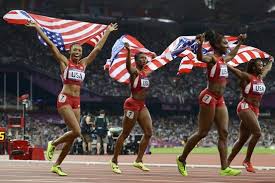
However, setbacks have also highlighted the need for improvement. In some competitions, baton exchange mistakes or last-minute lineup changes have prevented strong individual athletes from translating their speed into relay victories. These experiences have influenced USATF’s decision to overhaul its relay preparation system.
Centralized Leadership and Accountability
The One Team initiative is also tied to broader structural changes within USATF’s high-performance division. The organization has moved toward a more centralized leadership model in which relay coaches, team managers, and administrators coordinate closely to manage athlete selections and preparation.
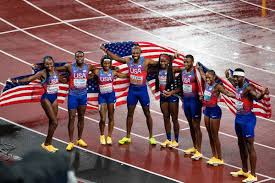
This structure is designed to improve accountability and ensure consistent communication between athletes, coaches, and federation officials. By streamlining decision-making, USATF aims to create a relay culture built on teamwork rather than last-minute adjustments.
Looking Ahead to Beijing and Los Angeles
The first major test for the One Team Relay Program will come at the 2027 World Athletics Championships in Beijing, where the United States hopes to build momentum toward the Los Angeles Olympics the following year.

With the LA 2028 Games set to take place on American soil, expectations for Team USA will be higher than ever. USATF leaders believe the new relay strategy will help transform the country’s immense sprinting talent into a coordinated force capable of dominating the global stage.
If the program succeeds, the One Team initiative could mark the beginning of a new era for American relay racing—one built on preparation, unity, and the pursuit of Olympic history.
